Highlights
- The shrine is at Kavi Kamboi in Gujarat.
- Changing tidal water levels explain the “disappearing” description.
- The published lunar-day access table is dated 2018; reconfirm your visit.
The shrine’s own website identifies Stambheshwar Mahadev at Kavi Kamboi, in Jambusar taluka, Bharuch district, Gujarat, and calls it a submerging shrine. Its Hindi description says the sea bathes the Shivling twice a day.
“Disappearing” is the attention-grabbing shorthand. The essential distinction is that water rises around and over the sacred site; the shrine is not physically removed and rebuilt between visits. Avoid reading the headline as a promise that every roof or surrounding structure becomes invisible on every tide.
A photograph can show one water level. It cannot, by itself, tell you when visitors may enter, how far the water will rise next, or whether the approach is safe.
The explanation begins with the Moon and the Sun
NOAA explains tides as the rise and fall of seawater in response to forces exerted by the Moon and Sun. As the water level changes at a coast, ground that was exposed can become covered, then exposed again.
That gives the “disappearing temple” a natural explanation without removing its devotional significance. The physical change is tidal; the interpretation as the sea’s worship belongs to religious tradition.
Do not assume that looking up at the Moon tells you the next access window. NOAA also explains that local geography and the way tidal waves travel affect when high and low water occur. This is background science, not a NOAA tide prediction for Kavi Kamboi.
Why devotees describe the sea as performing abhishek
Abhishek is ritual bathing of a deity. The temple’s description presents seawater washing the Shivling as the sea itself performing this act of worship.
The striking idea is a reversal of roles: instead of only a person carrying water to Shiva, the coastline supplies the water. That is a devotional way of seeing the same physical event, not evidence that the normal explanation of tides has stopped applying.
If you share the story with a friend, keep both parts together. “A Shiva shrine reached by the tide, described by devotees as the sea’s abhishek” is more informative than “a temple that magically vanishes”.
The Kartikeya connection is a sacred narrative, not a construction record
The temple website associates the shrine with Kartikeya and the aftermath of his battle with Tarakasura, referring to the Skanda Purana. We present that as the shrine’s religious narrative—not independently established archaeological dating.
The same distinction applies to spiritual benefits described in temple literature. A belief about blessings is not a guarantee of a particular health, financial or personal outcome. Visitors can respect the tradition without treating every devotional statement as a measurable historical or scientific claim.
The detail worth sending to a friend
The memorable discovery is not just a shrine hidden by water. It is that the same changing sea can be understood through coastal science and a devotional tradition—with neither requiring a misleading miracle claim.
For another story where first impressions hide the real meaning, explore why devotees dress as Kali at Kulasai Dasara. For a separate Shiva pilgrimage, see our Rameswaram guide; these are different destinations, not a one-day combined itinerary.
Planning your visit
The important catch: an old tide table is not today’s darshan forecast
The temple website has a Tide Timings page dated 27 February 2018. It lists darshan windows by lunar-calendar day, such as Ekam and Bij, rather than publishing a newly verified timetable for your chosen Gregorian date.
We have not independently confirmed that table’s current operational validity or converted it into an access promise for 17 October 2026. Do not assume an old screenshot is a live opening notice.
Before departure, contact the shrine through its official contact page and ask: “For my date, when should I arrive, when must I leave the approach, and where may I safely watch?” The page lists +91 94087 07508 and +91 98250 62695. Their publication online does not mean a call has been answered or that we have confirmed the day’s arrangements.
Plan the visit around permission—not a dramatic waterline photo
- Confirm the exact destination. Use Kavi Kamboi and the shrine’s name, not just a generic “Shiva beach temple” map search.
- Separate arrival from access. Being at the coast does not mean the shrine approach is open. Follow the temple’s current instructions and any local closure.
- Ask about the entire route. If wet or uneven ground, walking distance or standing would be difficult, discuss assistance, resting places and the permitted drop-off before travelling.
- Keep the return flexible. We have not verified current local bus times, taxi fares, parking charges or admission conditions for every visitor.
- Stay out of incoming water. Do not wait on the approach to capture a last photograph or treat a retreating waterline as permission to enter. Ask staff where observation is allowed.
These are RouteTales’ practical planning suggestions, not a substitute for local safety directions. This page does not certify a safe tide window, swimming area or step-free route.
Your quick reference
At a glance
- Location
- Kavi Kamboi, Jambusar taluka, Bharuch district, Gujarat
- Why “disappearing”?
- Tidal water covers the sacred site
- Devotional meaning
- The sea’s abhishek of the Shivling
- Scientific explanation
- Tides influenced by the Moon and Sun
- Timing caveat
- Published lunar-day table dated 2018; reconfirm for your date
- Before visiting
- Ask about access, safe observation, assistance and return transport
Common questions
Frequently asked questions
Does the temple physically vanish?
No. “Disappearing” describes the effect of changing water levels, not a structure moving or magically vanishing. Do not infer that every part is invisible on every tide.
Is the sea’s abhishek a scientific claim?
It is the temple’s devotional interpretation of seawater bathing the Shivling. Tides provide the natural explanation for the changing water level.
Can I use the posted tide table as today’s confirmed opening time?
No. The page is dated 2018 and lists lunar-calendar days. Its current validity and your specific access window need direct confirmation.
Can I stand near the shrine while the tide rises?
Do not assume permission or safety. Follow current local instructions and ask staff for an approved observation point.
Is entry and accessibility confirmed for every international visitor?
No. Ask the shrine about permitted areas, service conditions, mobility assistance and the full approach for your circumstances.
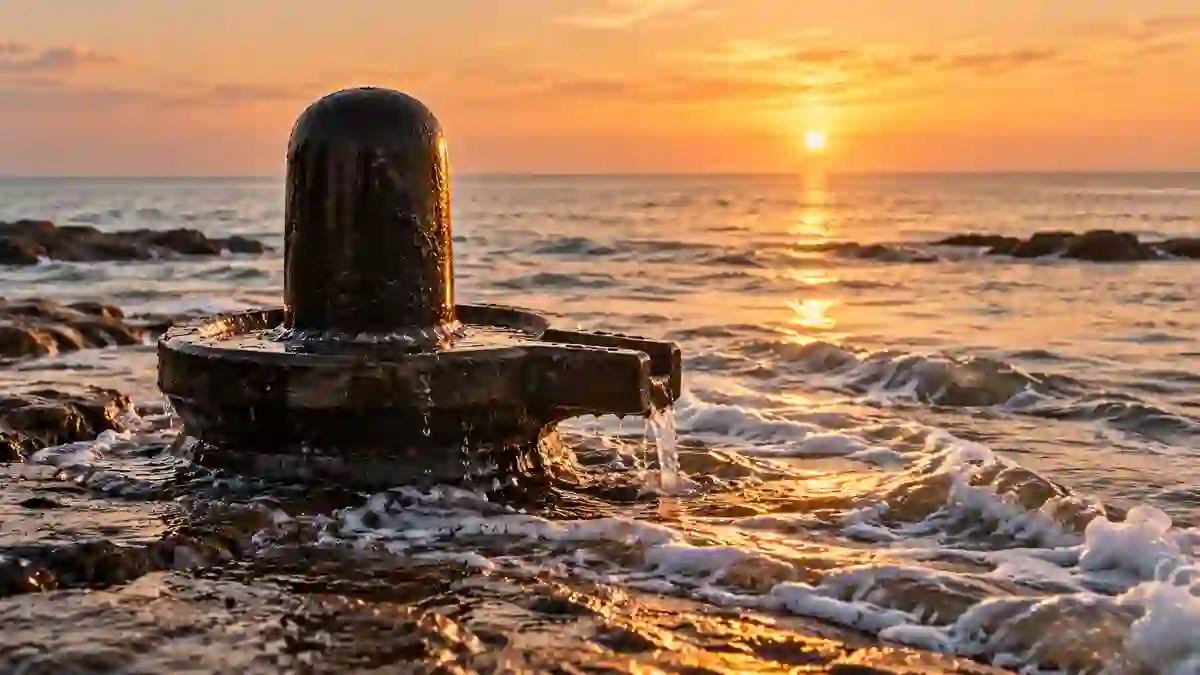
Is the hero image the actual temple?
No. It is a symbolic AI illustration and does not depict the real temple architecture or its access route.
Official sources & final checks
Sources reviewed on . Prices, timings and access rules can change. Confirm your date and service with the operator; this page does not show live availability.
- Temple website: shrine, location, sea abhishek and sacred narrative ↗
- Temple website: lunar-day tide table, page dated 27 February 2018 ↗
- Temple website: published contact details ↗
- NOAA: what causes tides (general science, not a local forecast) ↗
- NOAA: why local high-tide timing cannot be read directly from the Moon’s position ↗